Kingston Resorts needed materials that were both practical and polished. Guests needed to quickly understand a large, multi-area property, while the brand also needed to feel upscale, clear, and welcoming across every printed touchpoint.
I created a system that balanced those goals by making the materials easy to scan, visually cohesive, and aligned with the resort's established identity.
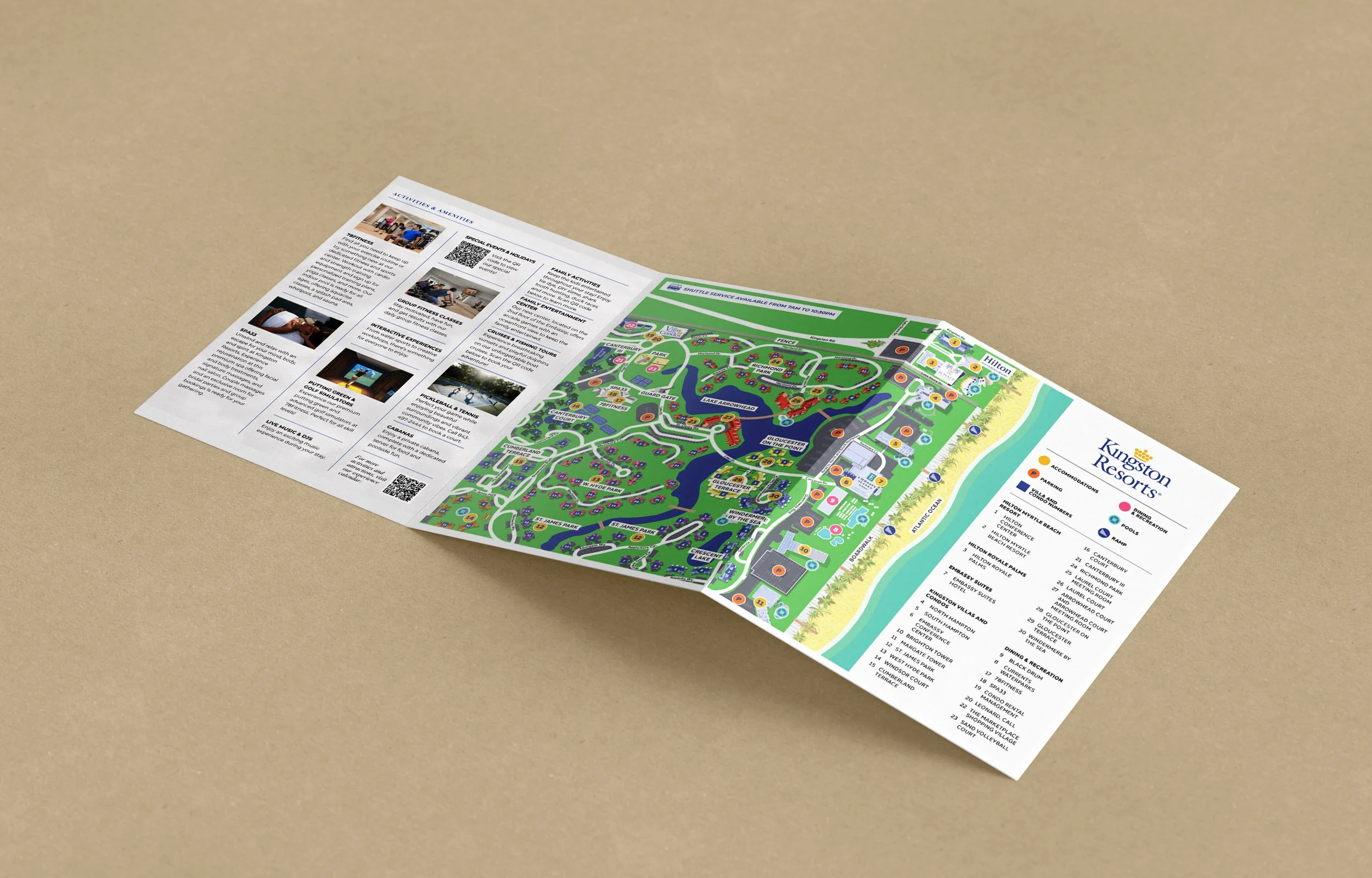
he main challenge was presenting a large amount of information in a format that felt simple, intuitive, and approachable.
The property itself includes multiple lodging areas, dining venues, recreational amenities, pools, parking, beach access points, and activity spaces. That meant the materials had to do more than look attractive - they had to reduce confusion and support the guest experience in real time.
Key design challenges included:
Simplifying complex wayfinding across a large resort footprint without overwhelming the user.
Organizing dense information in the in-room compendium so guests could find what they needed quickly.
Maintaining brand consistency across maps, editorial pages, amenity highlights, and informational spreads.
Designing for print usability, ensuring the materials remained legible, durable, and easy to handle in a hospitality setting.
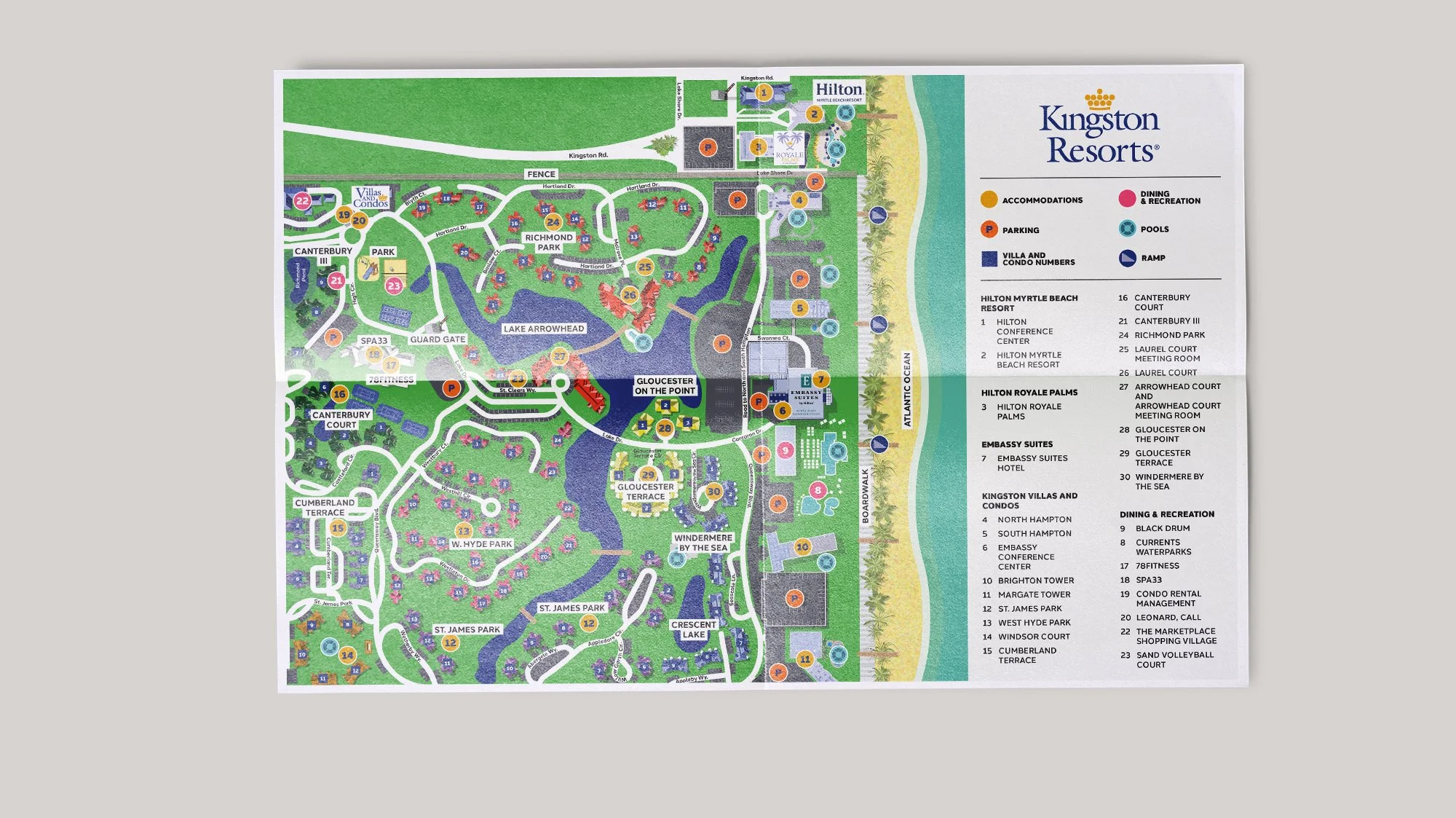
For the property map, I focused on clarity first. I used color-coded categories, numbered points of interest, and a structured legend to help guests distinguish between accommodations, dining and recreation, parking, pools, and beach access. The layout was organized to make the resort feel understandable at a glance while still including the level of detail needed for on-property navigation.
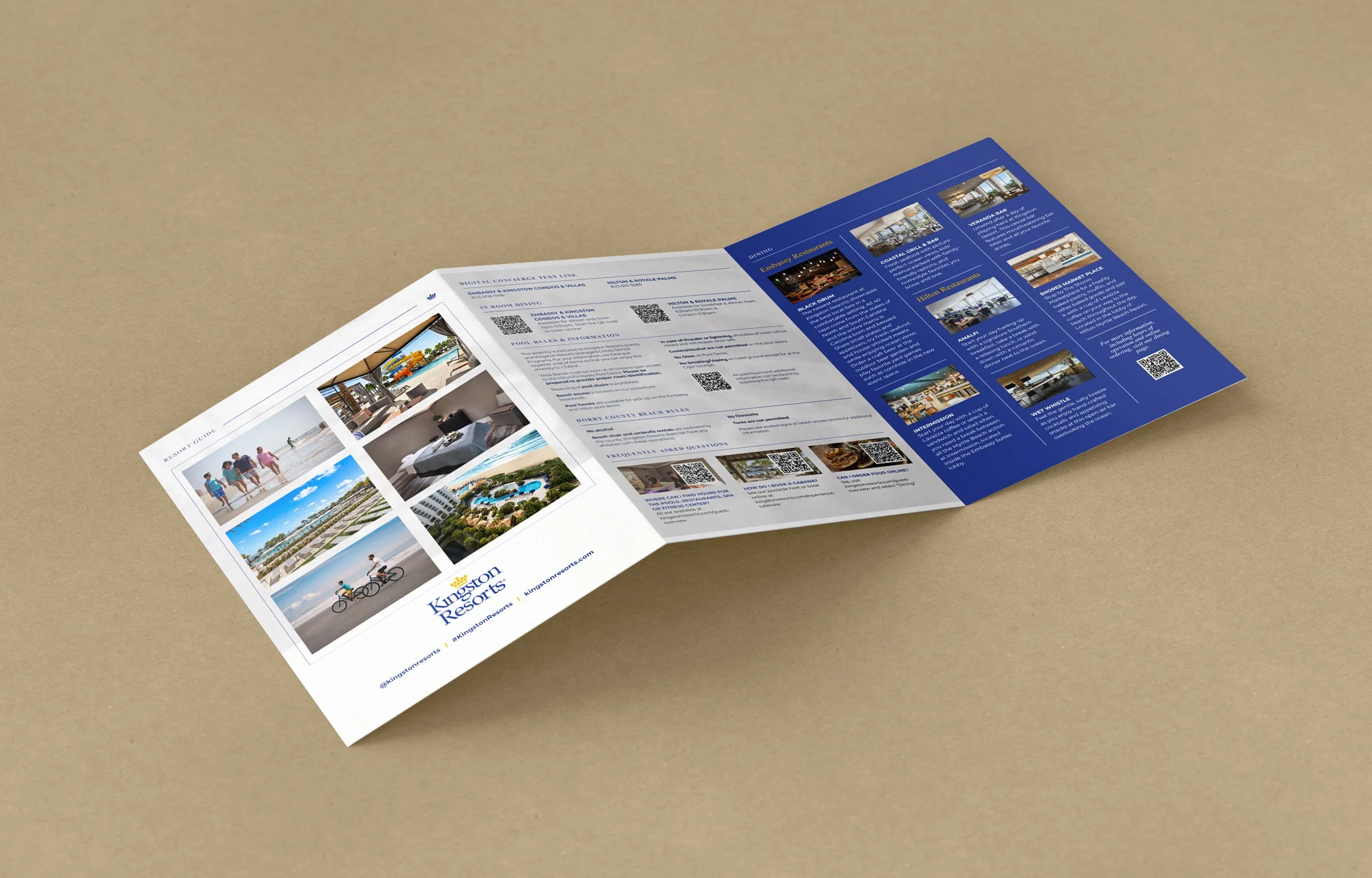
For the in-room compendium, I created a clean editorial structure that allowed operational information and marketing content to coexist without competing for attention. The piece includes resort details, amenity highlights, dining information, QR-enabled touchpoints, property guidance, and visual storytelling that reinforces the experience of staying at Kingston Resorts.
Across all materials, I kept the design language consistent through:
Brand-aligned typography and color
Clear visual hierarchy
Modular page layouts
Photography integration
Easy-to-reference informational blocks
Guest-friendly navigation and labeling
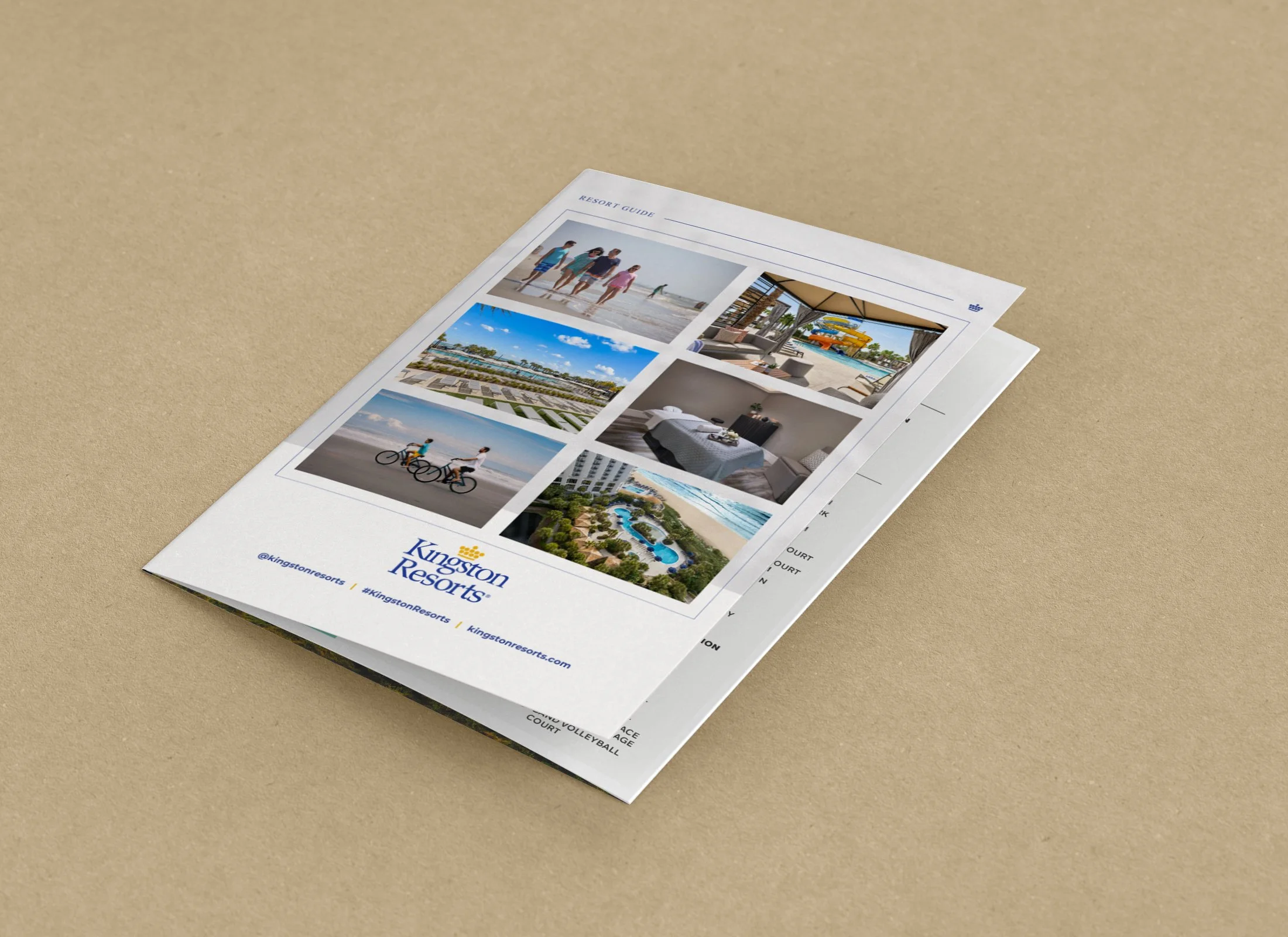
The final materials included a foldout resort guide with a branded cover, interior informational panels, dining and amenity sections, QR code integrations, and a large-format property map designed for fast comprehension.
The map serves as both a functional navigation tool and a branded visual asset. It translates the resort's spatial complexity into a guest-friendly experience, allowing visitors to identify lodging zones, amenities, and destinations with minimal friction.
The in-room compendium complements that experience by answering common guest questions, surfacing services and activities, and encouraging exploration of the property's offerings. Its structure supports both hospitality operations and marketing goals, helping guests move from basic orientation to deeper engagement with dining, recreation, and resort services.
This project gave Kingston Resorts a more unified and elevated set of printed materials that improved both guest usability and brand presentation.
Outcomes included:
Improved wayfinding clarity through a more legible and organized property map
Stronger brand cohesion across guest-facing print assets
A more premium in-room experience through polished, well-structured collateral
Better visibility for amenities and dining offerings through thoughtful content organization
A flexible marketing asset that supports both practical guest needs and promotional storytelling